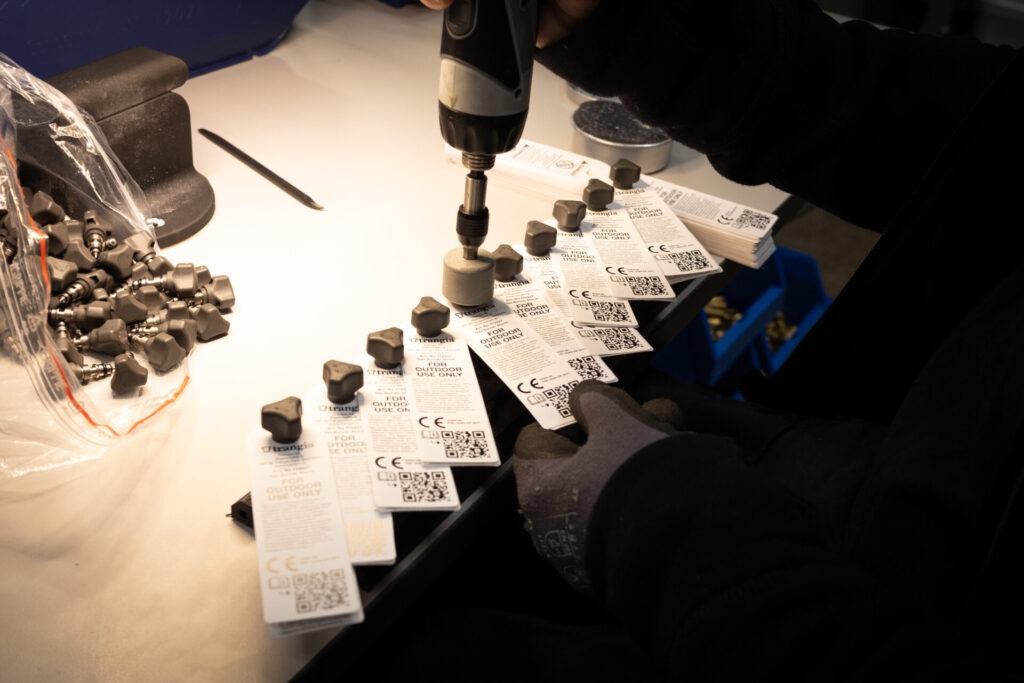
Gas burners for Trangia stoves – why choose original Trangia

Do you have a Trangia stove with a spirit burner and want to start cooking with gas? Or do you have an old gas burner that needs replacing? Then you don’t need to buy a completely new stove, you can simply add a Trangia gas burner.
Being able to replace parts is a key principle behind the Trangia stove, and the dimensions of the burner opening have remained the same since the first prototype was launched in 1951.
Why should you choose the original?
Being able to replace parts is a key principle behind the Trangia stove, and the dimensions of the burner opening have remained the same since the first prototype was launched in 1951. A stove passed down through generations can therefore continue to serve you on your trips, sometimes with new parts and a more modern burner. But when choosing accessories and a gas burner for your Trangia stove, there is more to consider than whether the parts fit!
Just because an accessory or burner fits does not mean the combination is approved
The dimensions of the Trangia burner opening have become a common reference for stoves with designs similar to ours. This means that other manufacturers’ burners may also physically fit a Trangia stove. However, compatibility involves more than physical fit. Even if a burner that fits a Trangia stove carries its own CE marking, this does not mean that it has been tested and approved as a system together with your Trangia stove.
To be sold in the EU, a camping stove with a gas burner must carry a CE marking. The complete stove system is tested with an independent testing and certification body. The stove is tested as a complete system because combustion and heat distribution depend on the combination of the burner’s output and the design of the windshields, pots and other accessories.
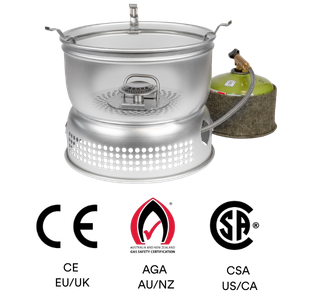
The Trangia Gas Burner Storm, along with previous generations of Trangia gas burners, has been tested and CE-marked in combination with Trangia stoves and other Trangia products. Gas burners from other brands are not covered by Trangia’s certification for these stove combinations. A burner from another manufacturer may have a different output or other characteristics that affect combustion, even if the burners look similar.
What is required for a gas stove to carry a CE marking?
To be sold on the European market, a gas stove must carry a CE marking (other markets, such as Australia and the USA, have their own certification marks). Before a gas burner is approved, it undergoes extensive testing and assessment by an independent, authorised testing and certification body. Safety is the main focus of this testing.
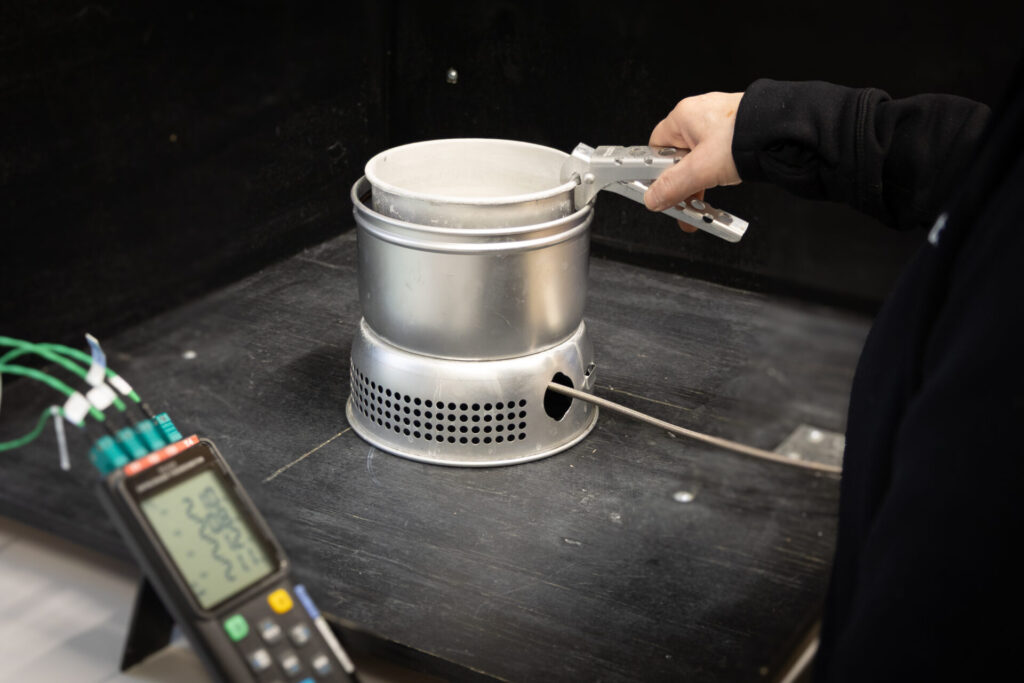
Some of the areas checked
*Read more about carbon monoxide and how to minimise the risk of carbon monoxide poisoning in our separate article: Part 2 carbon monoxide from camping stoves – coming soon
Buying ovens, grills and other accessories for your Trangia stove
The safety considerations above, particularly carbon monoxide levels and temperatures, make your choice of accessories important. An accessory that changes the airflow, the distance to the flame or the way heat is distributed can significantly affect the safety of the stove. Just because an accessory from another manufacturer fits the stove does not mean it is part of the tested and approved combination. When you choose original parts and use the combinations specified in the instructions, you know that your setup is covered by our certification.
Our responsibility continues through the factory and on to our customers
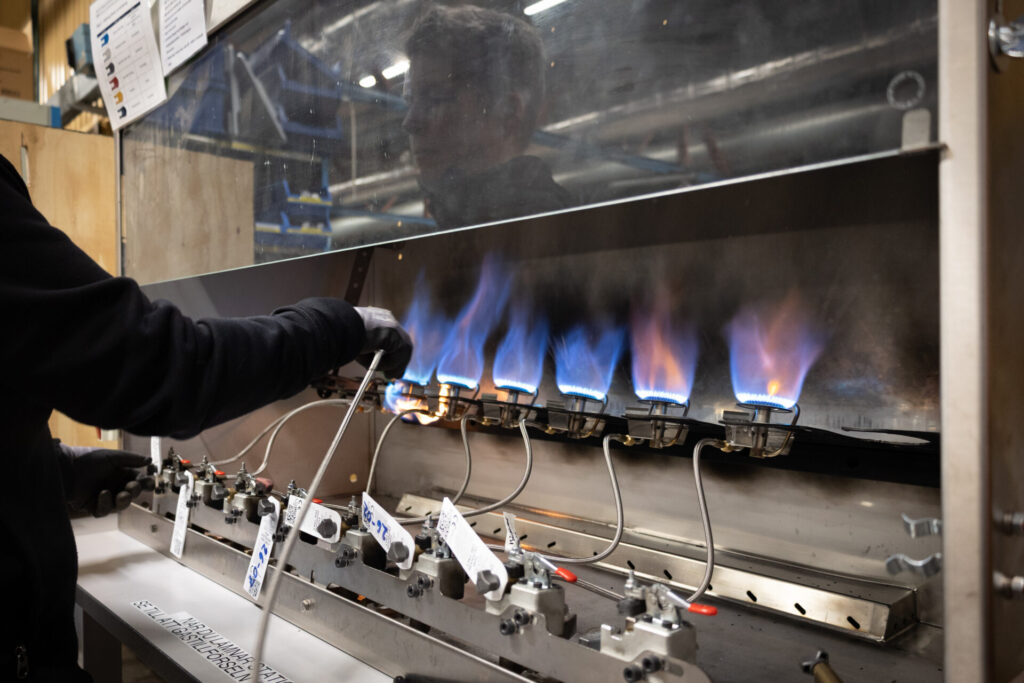
To maintain compliance with the requirements for CE marking, we need to ensure that every burner we manufacture matches the approved design. All our gas burners are pressure-tested and test-fired by trained staff as part of our quality checks before leaving our factory in Trångsviken. Regular checks are also carried out by an independent third party.
Behind every burner is work you never see, but which plays an important part in keeping you safe.
Remember!