Spirit stove vs gas stove – which should you choose?

Spirit stove or gas stove: which is the best choice for you? Both options have their advantages, and much depends on how you plan to use your camping stove.
In this guide, we look at the main differences between spirit and gas stoves, when each option works best and what to consider for different types of trips.
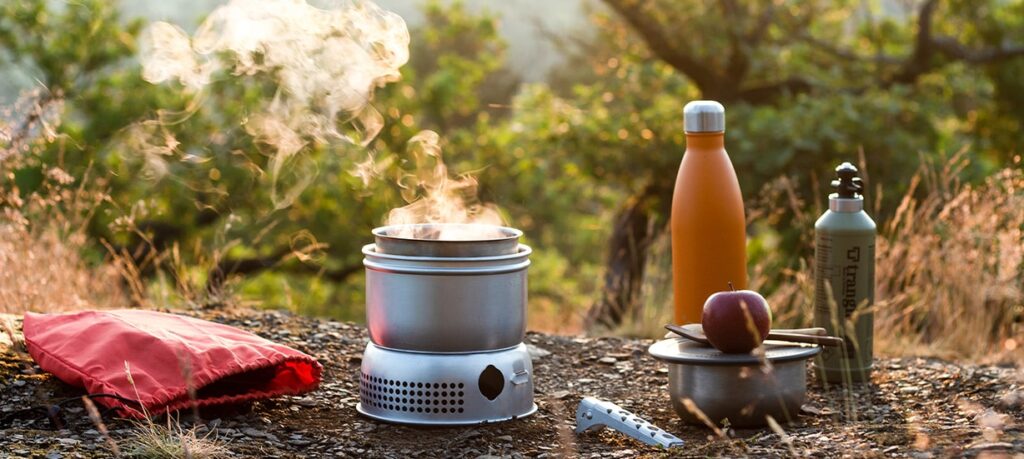
What is the difference between a spirit stove and a gas stove?
Spirit and gas stoves mainly differ in boiling time, heat control, design and the fuel they use. A gas stove generally brings water to the boil faster and is easier to fine-tune, while a spirit stove has a simpler design, runs quietly and has few parts that can break.
Here are some of the main differences between spirit and gas stoves:
| Spirit stove | Gas stove | |
| Boiling time | Longer | Faster |
| Heat control | More limited | Easy to adjust |
| Noise level | Quiet | Audible |
| Design | Simple, few parts | More components |
| Soot | May produce soot depending on the fuel | Minimal soot |
| Fuel | Alcohol-based spirit fuel | Propane/butane/isobutane gas |
Not sure which fuel to use? Our guide to camping stove fuel covers T-röd (methylated spirits), Tenol, gas canisters and LPG.
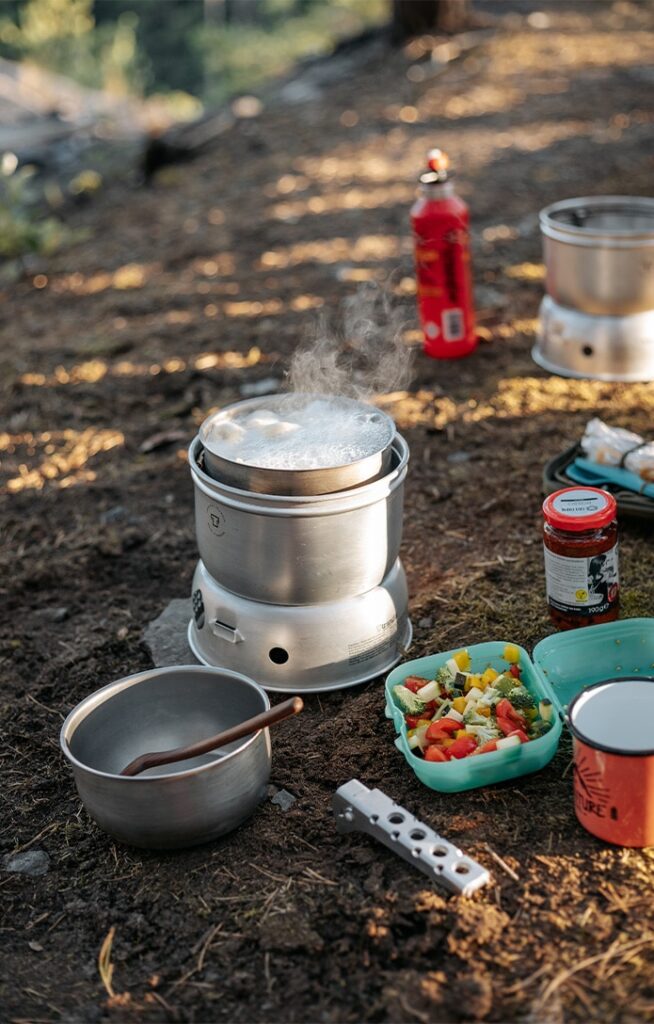
When is a spirit stove the best choice?
A spirit stove is a good choice when you want a simple, reliable way to cook outdoors. Our spirit burners have few parts, normally require no maintenance and operate almost silently.
A spirit stove is a good choice when:
A spirit burner takes longer to bring water to the boil than a gas burner and may produce less heat in cooler temperatures. If you plan to use it in colder weather, at around +5 °C and below you can use a preheater to help the burner get going faster and improve its performance.
If you want to reduce the climate impact of your fuel, a spirit stove is another good option. Gas is a fossil fuel, while spirit fuel has a significantly lower climate footprint when used.
-

Trangia Stove 25-3 UL
1009 SEKUltralight aluminium. Choose between Spirit burner or Gas burner.- SB / Spirit Burner
- GB / Gas Burner
Our bestseller
Choose This product has multiple variants. The options may be chosen on the product page -

Trangia Stove 25-2 HA
2169 SEKHardanodized aluminium. Choose between Spirit burner or Gas burner.- SB / Spirit Burner
- GB / Gas Burner
-

Trangia Stove 25-3 UL Cloudberry
1149 SEKTrangia + Cloudberry = Jämtland. Choose your burner and add engraving here!- SB / Spirit Burner
- GB / Gas Burner
New!
Choose This product has multiple variants. The options may be chosen on the product page -
Trangia Stove 35-5 UL/R
1269 SEKLimited edition!
Buy -

Trangia Stove 25-3 UL Power Pink
1149 SEKThree colors. Three stories – It all started with a wish for a sparkly pink stove …- SB / Spirit Burner
- GB / Gas Burner
New!
Choose This product has multiple variants. The options may be chosen on the product page
When is a gas stove the best choice?
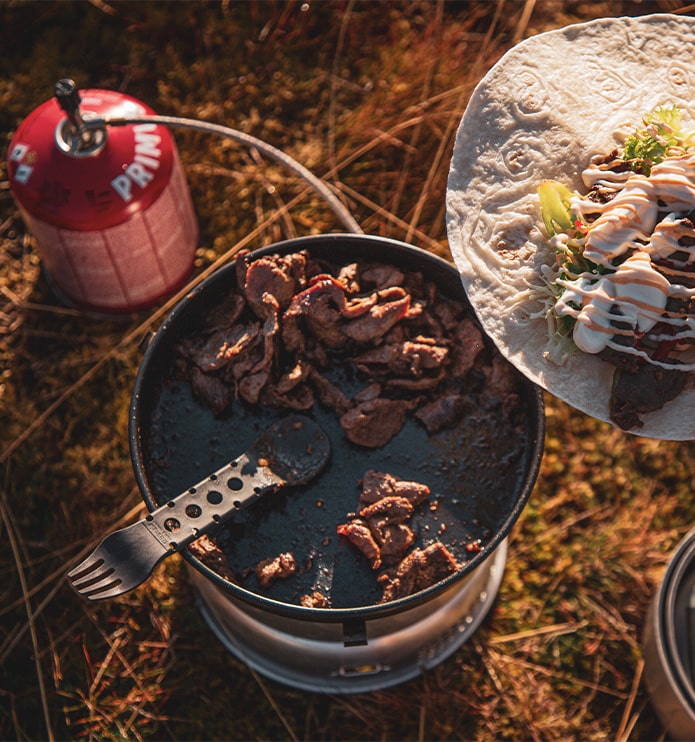
A gas stove is a good choice when you want to boil water and start cooking quickly. The gas burner provides high heat output and makes it easy to adjust the temperature as you cook.
A gas stove is particularly suitable when:
-
Trangia Stove 25-3 UL
1009 SEKUltralight aluminium. Choose between Spirit burner or Gas burner.- SB / Spirit Burner
- GB / Gas Burner
Our bestseller
Choose This product has multiple variants. The options may be chosen on the product page -
Trangia Stove 25-2 HA
2169 SEKHardanodized aluminium. Choose between Spirit burner or Gas burner.- SB / Spirit Burner
- GB / Gas Burner
-
Trangia Stove 25-3 UL Cloudberry
1149 SEKTrangia + Cloudberry = Jämtland. Choose your burner and add engraving here!- SB / Spirit Burner
- GB / Gas Burner
New!
Choose This product has multiple variants. The options may be chosen on the product page -
Trangia Stove 35-5 UL/R
1269 SEKLimited edition!
Buy -
Trangia Stove 25-3 UL Power Pink
1149 SEKThree colors. Three stories – It all started with a wish for a sparkly pink stove …- SB / Spirit Burner
- GB / Gas Burner
New!
Choose This product has multiple variants. The options may be chosen on the product page
Choosing a spirit or gas stove for different types of trips
The best type of stove also depends on the trip you are planning, the weather and how much food you intend to cook. Here are some examples of different situations and which type of stove suits each one.
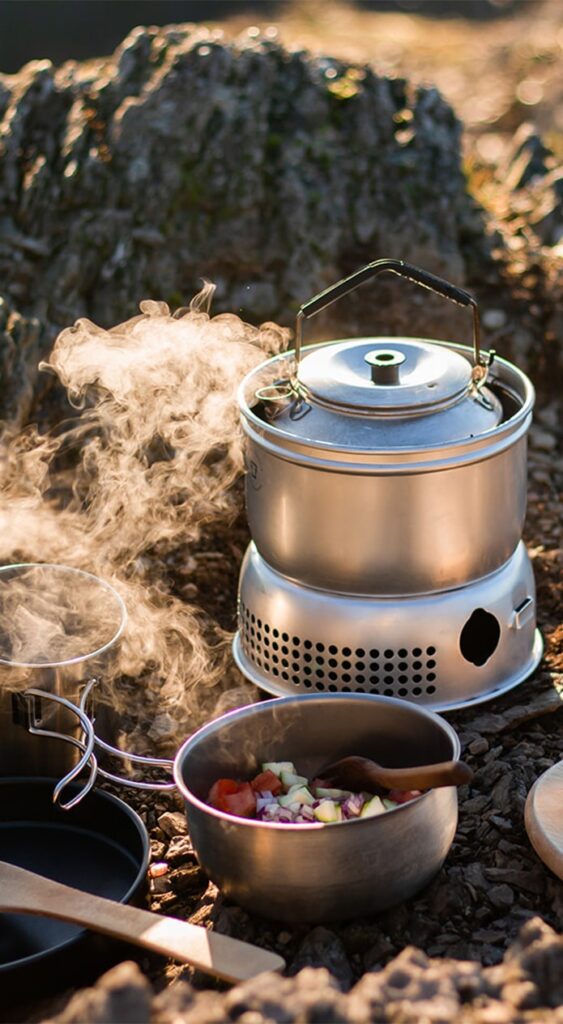
Cooking outdoors on a day trip
Both spirit and gas stoves work well on shorter day trips. Want to boil water quickly for coffee or a simple meal? A gas stove is a convenient choice. If you are taking things at a slower pace and appreciate a quiet burner, a spirit stove can be just as suitable.
Camping stoves for multi-day hikes
On longer hikes, fuel consumption and what you carry become more important. A gas stove cooks quickly and is easy to adjust, while a spirit stove lets you bring the amount of fuel you need for that particular trip. Before choosing, consider:
If you mainly boil water and want it to heat up quickly, a gas stove can be practical. A spirit stove can be a good choice if you want a straightforward stove and the flexibility to adjust the amount of fuel you carry to the length of your trip.
Cooking outdoors on camping and family trips
When camping or cooking for several people, a stove that gets food ready quickly can be useful. If you need to boil larger quantities of water or prepare several portions, a gas stove is convenient because its high heat output speeds up cooking.
When you want to cook more than simple meals
If you want to fry, simmer or prepare dishes that require several heat adjustments during cooking, a gas stove is often the easiest choice. The gas burner lets you raise and lower the heat immediately, giving you better control as you cook. A spirit stove works well for simple cooking and boiling, but fine-tuning the heat takes longer.
Camping stoves for cooking in colder weather
Falling temperatures affect both spirit and gas stoves. A spirit burner produces less heat in the cold, but a preheater can improve its performance. Gas is also affected by low temperatures, so the gas mixture you choose matters. On winter trips, it is therefore especially important to choose fuel and equipment to suit the temperatures you expect to encounter.
Want to compare other aspects of a Trangia stove, such as size, materials and accessories? Read our guide to choosing the right camping stove.
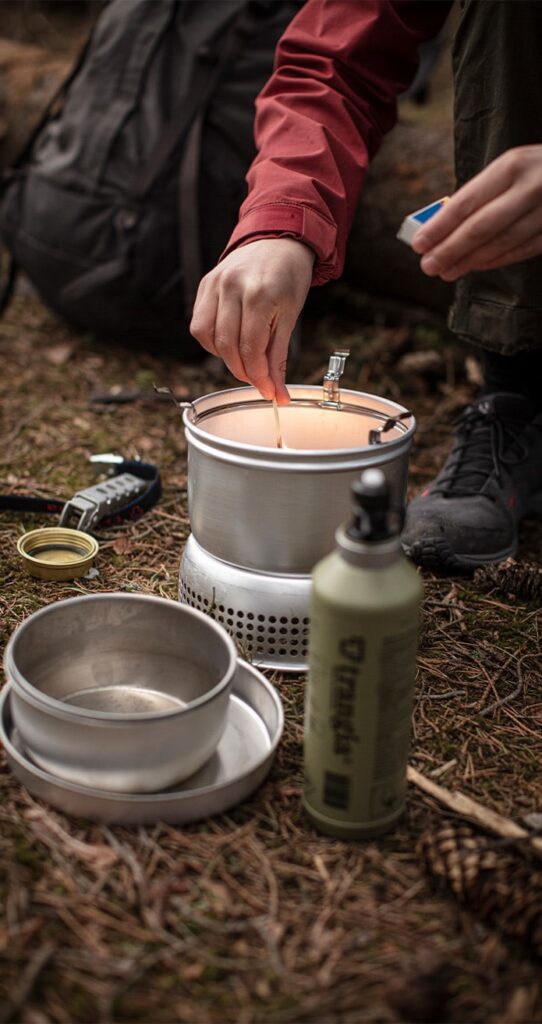
Can you switch between spirit and gas in a Trangia stove?
Yes, you can switch between spirit and gas burners in our classic Trangia stoves. Both fit into the lower windshield, making it easy to adapt your stove to your trip.
This means you do not have to commit to either a spirit or a gas stove. You can start with the burner that best suits your needs and add the other later if you want more flexibility.
Swedish camping stoves from Trangia since 1925
Since 1925, we have been making camping stoves with a focus on equipment designed to accompany you on many trips. With our classic Trangia stoves, the choice between gas and spirit does not have to be permanent. You can use both spirit and gas burners and adapt your camping stove to suit your needs.
Want to learn more about our different burners? Read our guide to Trangia burners.